
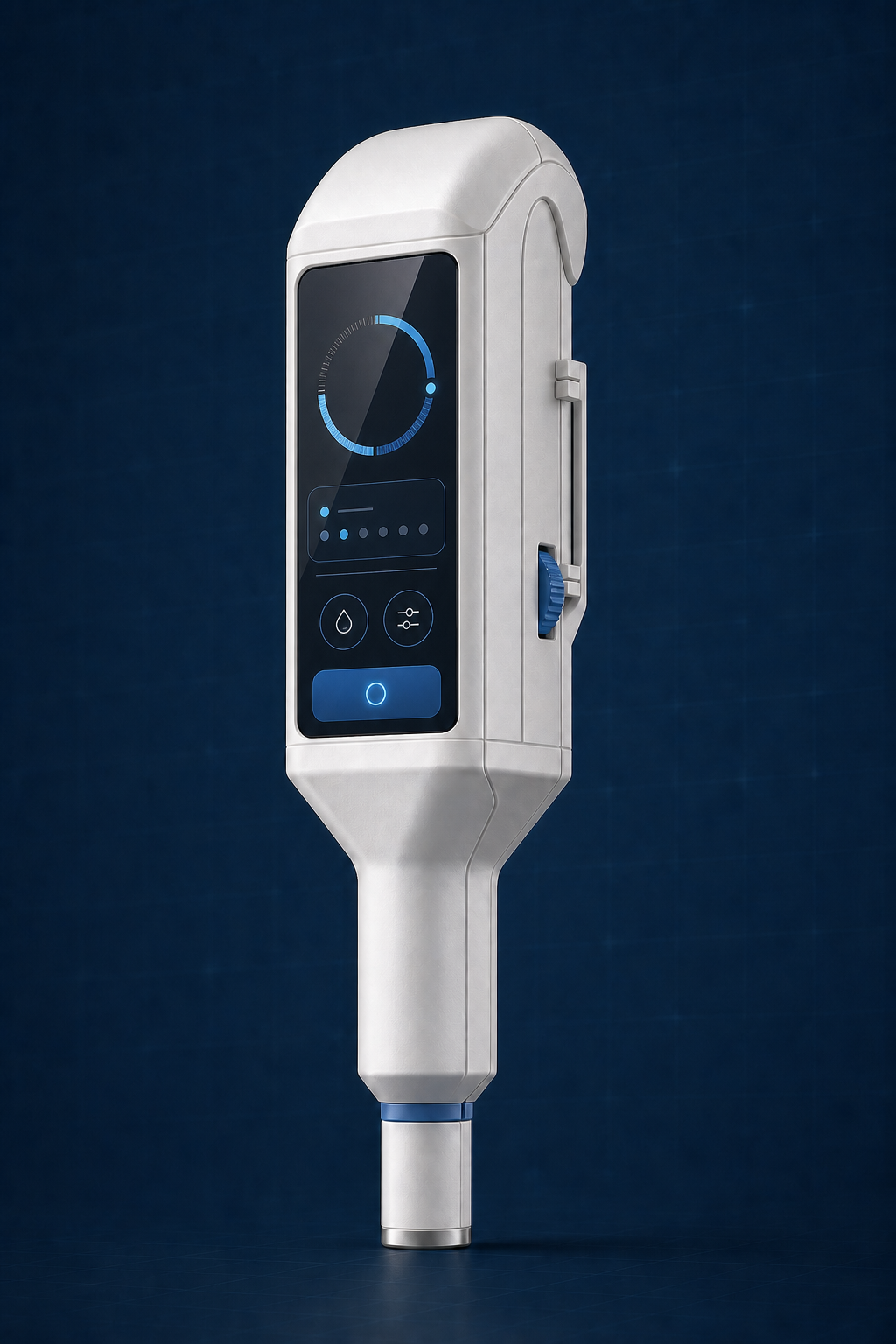
Intramuscular administration
AutoIM
A more substantial form intended to support controlled depth, guided delivery, and complete syringe obscuration for compatible IM workflows.
AutoIM / SQ injection support
AutoIM and AutoSQ are reusable, touchscreen-guided injection aid concepts being developed around servo-controlled motion, configurable administration, standard prescription syringe compatibility objectives, and a calmer at-home experience.
AutoIM / SQ is under development and is not currently available for sale. Final features, compatibility, and regulatory pathway remain subject to validation.
One design family
AutoIM and AutoSQ share a calm, touchscreen-led interaction model while adapting their physical form to the needs of intramuscular and subcutaneous administration.
A more substantial form intended to support controlled depth, guided delivery, and complete syringe obscuration for compatible IM workflows.
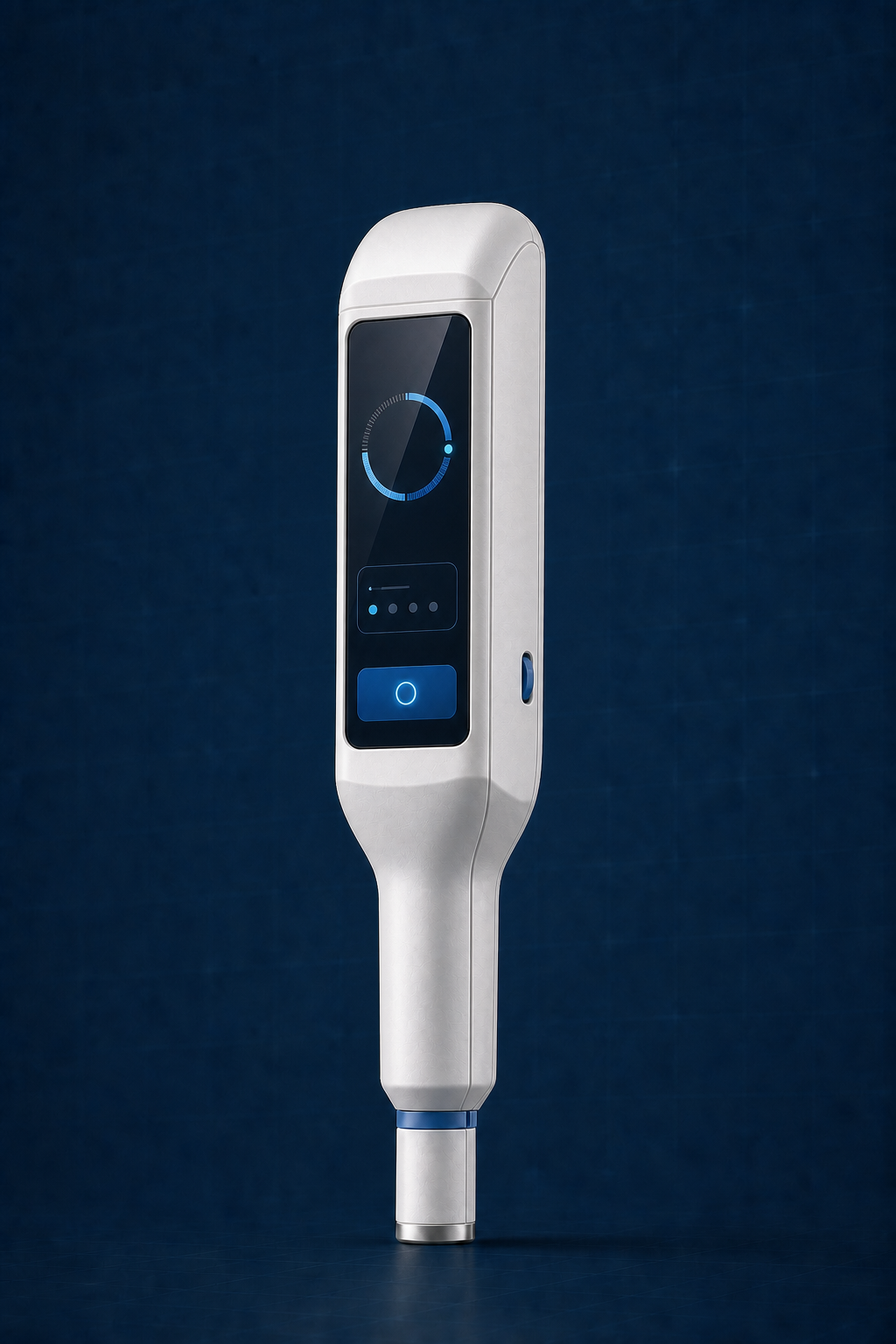
A slimmer, approximately 15% smaller concept with a simplified housing and interface for compatible subcutaneous workflows.
The experience
AutoIM / SQ begins with a straightforward design premise: people should not have to confront every anxiety-inducing part of the injection process in order to complete their therapy.
The platform is being developed around controlled electromechanical movement rather than a single fixed spring-fired event.
The forward-facing touchscreen is intended to guide compatible depth, delivery-rate, and administration settings through a deliberate sequence.
The design direction centers on accommodating compatible prescription syringes rather than requiring a proprietary medication cartridge.
Screen, vibration, and audio cues are being considered to support positioning, progress awareness, completion, and accessibility.
Intended workflow
Final operation and compatibility will depend on design validation, human-factors work, and the applicable instructions for use.
Use the touchscreen to review the intended injection profile and compatible administration settings.
Place a compatible prescription syringe and needle into the shielded device chamber.
Bring the device to the intended site and confirm the guided contact and readiness sequence.
Initiate servo-guided insertion and medication delivery while the interface communicates progress.
Complete the sequence with the syringe withdrawn from the body and remaining obscured for removal and disposal.
Potential therapy pathways
Early product research is considering therapy environments where patients already manage prescribed IM or SQ injections at home. Final compatibility and intended uses will depend on validation and regulatory review.
AutoIM began with the challenges of recurring intramuscular self-injection, including anxiety, depth consistency, and delivery-rate control.
AutoSQ is being shaped as a smaller platform for compatible syringe-based subcutaneous therapies, including compounded workflows where appropriate.
Repeated at-home injection schedules can create emotional and logistical burden that may benefit from clearer guidance and routine support.
Additional oncology, biologic, and specialty-treatment workflows may be evaluated with clinical and regulatory partners.
Development discipline
Design position
AutoIM / SQ must earn confidence through usability, compatibility, clear training, thoughtful interface design, and a development path that respects the responsibilities of medical-device design.
Concept goals
AutoIM / SQ development
We are seeking input from clinicians, human-factors specialists, patient advocates, research partners, and organizations working in injection-based therapy.
Contact Veilpoint->